The Importance of Marine Protected Areas (MPAs)
Posted by on May 19, 2026
Marine Protected Areas (MPAs) play a vital role in protecting marine biodiversity, restoring ecosystems, supporting sustainable fisheries, and strengthening ocean resilience to climate change worldwide.
What Are MPAs (Marine Protected Areas)?
MPAs (Marine Protected Areas) are clearly defined ocean regions where human activities are regulated to conserve marine ecosystems and biodiversity. They vary in level of protection, ranging from fully protected “no-take” zones to multiple-use areas that allow controlled, sustainable activities.
Unlike general ocean conservation measures, MPAs are spatial management tools designed to protect critical habitats, rebuild marine populations, and maintain ecosystem balance. By limiting harmful activities such as overfishing and habitat destruction, MPAs support long-term ocean health and sustainability.
World Map Highlighting Marine Protected Areas
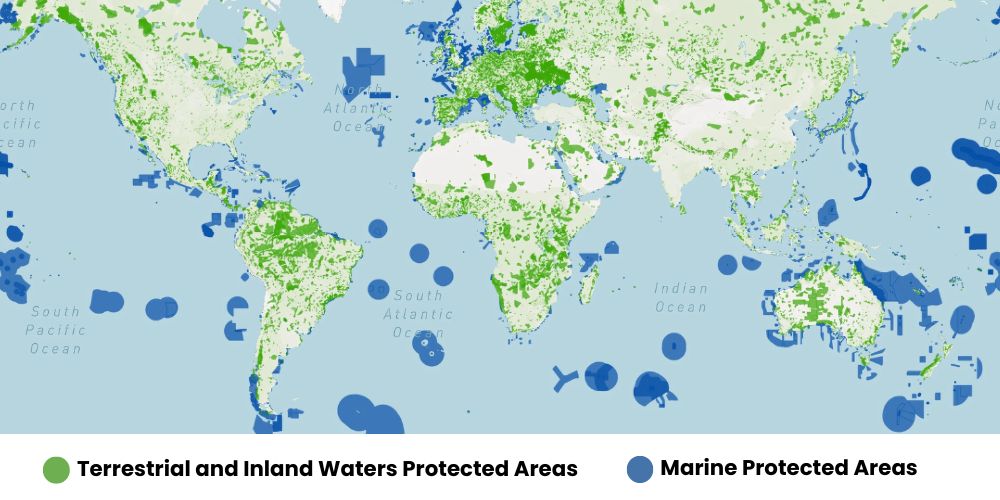
The above image shows the global map of Marine Protected Areas (MPAs) on Protected Planet, which highlights key conservation regions and the worldwide distribution of ocean protection efforts.
Why Are Marine Protected Areas Important?
Marine Protected Areas (MPAs) are important because they help safeguard ocean ecosystems, support the recovery of declining marine species, and ensure the long-term sustainability of ocean resources. By regulating human activities, MPAs reduce pressure on marine environments and strengthen ecosystem resilience to climate change.
They play a key role in rebuilding fish stocks, promoting responsible and sustainable fishing practices, and protecting essential habitats such as coral reefs, mangroves, and seagrass beds. This contributes to healthier marine ecosystems, improved biodiversity, and more stable fisheries over time.
In addition, MPAs provide valuable opportunities for scientific research and long-term environmental monitoring. They also support economic growth through eco-tourism and help sustain the livelihoods of coastal communities that depend on marine resources.
Role of MPAs in Protecting Marine Biodiversity
MPAs protect marine biodiversity by offering refuges and opportunities for recovery processes of significantly declining species. In these areas, population regeneration can be realized with no human interference.
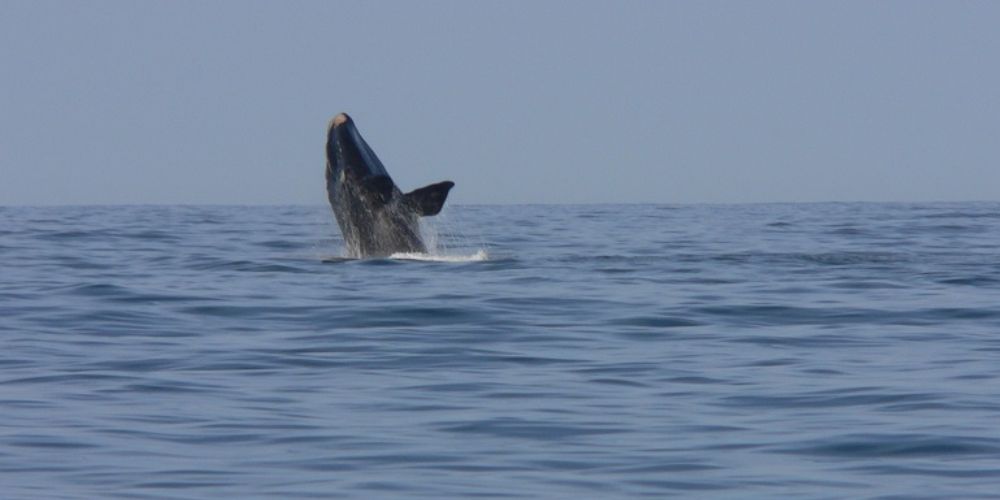
Preserved habitats include coral reefs, mangroves, and seagrass beds, which account for a wide array of marine life, from fish and invertebrates to increasingly larger species like sharks and large aquatic mammals.
These no-take zones provide a safe ground for breeding and nurturing, thus ensuring healthier and more diverse ecosystems.
Real-World Examples of Successful MPAs
Numerous successful MPAs worldwide demonstrate their effectiveness in preserving marine ecosystems. For instance, the Great Barrier Reef Marine Park, recognized for its vast coral reef system, maintains biological diversity and sustains a thriving eco-tourism industry. Similarly, the Channel Islands MPA in California has witnessed remarkable fish population recoveries, benefiting both local ecosystems and fisheries.
In the Philippines, for instance, the UNESCO World Heritage site Tubbataha Reefs Natural Park has since become an outstanding model of coral reef protection and a demonstration of how MPAs can achieve ecological recovery in the long run and economic growth through ecotourism.
Ecological Benefits of MPAs
MPAs have significant ecological gains, like recovering overfishing and protecting critical habitats. They can be safe havens where marine life may thrive, free of all pressures from fishing, pollution, or habitat destruction. This will allow fish, invertebrates, and other marine organisms to have healthier populations, which supports larger predators and maintains the balance of ecosystems.
The MPAs also protect coral reefs, seagrass beds, and mangroves, thus guaranteeing the perpetuation of those crucial habitats. Since MPAs enhance biodiversity, they promote ecosystem resilience, enabling marine ecosystems to be more resistant to climate change.
Economic and Societal Impact of MPAs
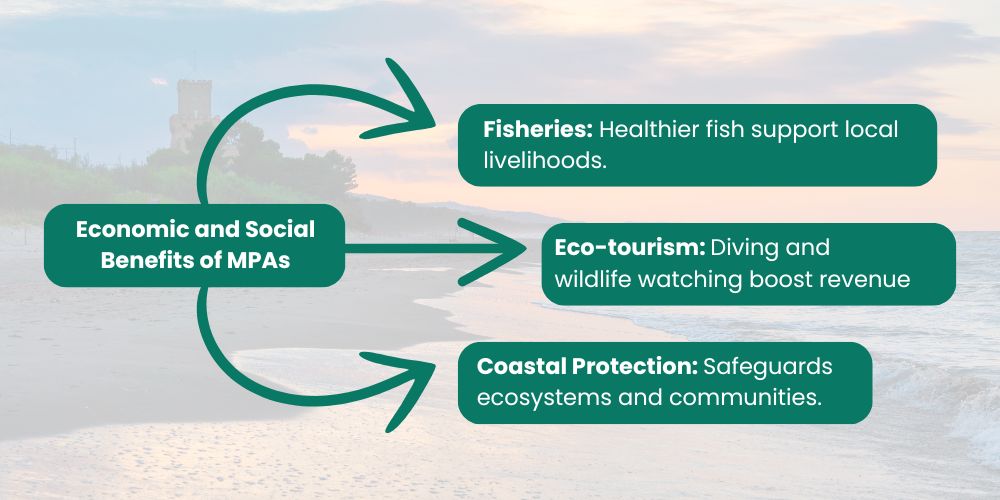
MPAs achieve considerable economic and social benefits through increased sustainable fisheries, eco-tourism potentials, and increased coastal protection. Generally speaking, a more excellent supply of healthier fish populations within MPAs leads to spillover into surrounding areas, benefiting the local fishing industries and ensuring a long-term livelihood for coastal communities. Activities involving diving and wildlife watching focused on MPAs and their eco-tourism value create revenue within the community while promoting conservation.
Challenges and Misconceptions About MPAs
While MPAs offer many benefits, they also face challenges and misconceptions. A common myth is that MPAs solely restrict human activities, leading to financial losses for local communities. However, when managed effectively, MPAs can promote sustainable practices that benefit both the environment and the economy. Additionally, it’s important to recognize that MPAs are part of a broader strategy for marine conservation, not a standalone solution.
The second myth is that MPAs can solve all marine conservation-related problems; MPAs form part of a more extensive process. Additionally, enforcement is usually problematic because resources are only available occasionally; hence, illegal fishing occurs.
Global Expansion of MPAs: Current Statistics
MPAs have proliferated unprecedentedly: over 8% of the world's oceans are now recognized as protected. It includes over 18,000 distinct MPAs covering approximately 27 million square kilometers of marine territory. The political will to achieve the global conservation target, such as 30% protection of the world's oceans by 2030, is reflected within the Global Biodiversity Framework. While MPAs are growing, effective management and enforcement remain vital to securing long-term conservation outcomes and biodiversity recovery.
Are Marine Protected Areas Effective?
Marine Protected Areas (MPAs) are widely recognized as important tools for conserving marine ecosystems and biodiversity. Research highlights that they can support ecosystem recovery and improve ecological conditions. However, studies show that their effectiveness depends on factors such as data integration, monitoring, governance, and long-term management, which play a critical role in evaluating and improving MPA performance.
MPAs as a Tool for Climate Change Mitigation
MPAs are essential tools in fighting climate change. They protect ecosystems that contribute significantly to carbon storage, such as mangroves, seagrass beds, and salt marshes. These ecotones sequester large amounts of carbon, reducing the level of greenhouse gases present in the atmosphere. By maintaining these areas and preventing damage, MPAs contribute to avoiding the release of stored carbon, preserving biodiversity, and promoting ecosystem resilience.
How Our Marine Research Internship Contributes to Conservation
Our Marine Research Internship program allows participants to join us on the ground in marine conservation and actively participate in protecting and researching marine ecosystems. Current research involving interns includes monitoring marine biodiversity, studying sharks and mammals, and gathering vital data for effective conservation.
In addition, the contribution to the community, together with scientists through fieldwork, advances knowledge on marine ecosystems and could thus positively impact the conservation of local measures. This exposure gives participants hands-on skills while enriching their commitment to ocean conservation.
Our Marine Research Volunteer Program
Our Marine Research Volunteer Program allows participants to actively participate in marine conservation by helping with critical research and fieldwork. Volunteers work alongside scientists on projects such as shark tagging, biodiversity assessments, and habitat monitoring, which yield valuable data to support marine protection and management actions. This program offers the perfect venue for any individual to participate in various meaningful conservation initiatives while gaining relevant experience in marine research.
Conclusion
MPAs rank among the most important methods of managing oceans due to their protection from biodiversity loss, the viability of fisheries, and many concerns about climate change. MPAs, research, and community participation are crucial to marine ecosystems' health.
Through involvement in initiatives like the Marine Research Internship and Volunteer programs at Oceans Research Institute, hands-on experience in marine conservation can be achieved, and practical, long-lasting protection can be passed on to our oceans. The Oceans Research Institute, being a trusted leader, offers a very valid opportunity to make a real difference in marine sustainability efforts.